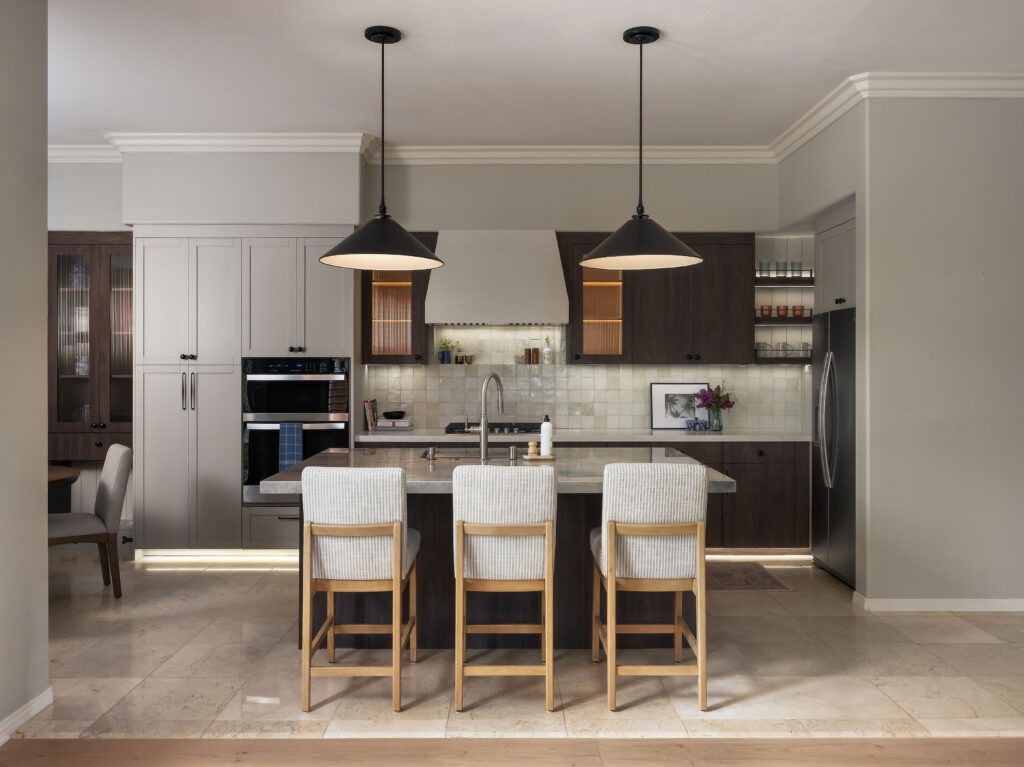
While aesthetics are an important part of design, one of our first conversations with every new client is about where to invest in your home. In other words, where your money truly matters, and where you can afford to pull back.
Because here’s the truth that most renovation content won’t tell you: a beautiful home isn’t about spending more. It’s about spending where it actually counts.
After years of designing homes across San Diego, we’ve seen what happens when people invest in the right places, and what happens when they don’t. The difference isn’t always visible on day one. Instead, it shows up three years in, when the cabinetry still looks immaculate and the “budget” faucet is already on its third replacement.
This post is the framework we walk every client through before we make a single selection. Save it. Come back to it. Share it with anyone you know who’s about to start a renovation.
The short answer
Invest in what you use every day and can’t easily change later: cabinetry and millwork, flooring, plumbing fixtures, lighting and the hardworking pieces you touch daily. Save on items that are easy to swap, such as decor, accessories and some accent furniture.
The Golden Rule: How to Invest in Your Home
Before we get into specifics, here’s the principle that underlies everything:
Invest in what you use every day and can’t easily change. Save on what you can swap out later.
That’s it. Every renovation decision, whether to splurge or simplify, comes back to that rule. The more permanent, functional and daily-use something is, the more it’s worth investing in for your home.
Let’s break it down.
Where to Invest in Your Home
1. Cabinetry and Millwork
Cabinetry is the single most important place to invest in your home’s kitchens, bathrooms and built-ins.
Here’s why: cabinetry and flooring form the foundation of the room. Every other element responds to them, from the countertops and hardware to the appliances and lighting. When they’re aligned, the space feels intentional from the ground up.
Well-made cabinetry holds up beautifully for decades. However, craftsmanship isn’t just about how it looks on the outside. It also means planning the interior from the start: the drawer layout, the shelf depths, and the way the space works for how you live. The result is cabinetry that looks beautiful and works beautifully every single day. You’ll never have to rethink it.
It’s worth understanding what you get at different price points. Most economy cabinetry uses MDF. Within five years, sometimes sooner, you’ll notice the finish wearing at the edges. Drawer faces stop sitting flush, and hardware needs tightening or replacing. This isn’t a flaw in the product; it’s simply what that price point delivers. Still, most people don’t want to revisit their cabinetry in five years. When you invest in quality from the start, you’re not spending more. You’re spending once.
MDF is compressed wood fiber rather than solid wood or plywood, so it doesn’t handle moisture or weight the same way. Over time, MDF can swell, warp or break down at the edges, especially in humid kitchens and bathrooms. It also doesn’t hold screws as well as plywood, so hinges and hardware can loosen with daily use.
What to look for in quality cabinetry
- Solid wood or plywood construction (not MDF or particleboard, which can warp over time)
- Soft-close hinges and drawer glides – you’ll notice the difference every single day
- Dovetail drawer boxes – a sign of craftsmanship that holds up for decades
- Custom or semi-custom options
In our San Diego projects, we recommend putting 35–50% of a kitchen renovation budget toward cabinetry. We know that number can feel significant on paper. But we’ve seen the same thing time and again: ten years in, clients who invested in quality cabinetry never think about their cabinets. The doors still hang perfectly. The drawers still glide. The finish looks the way it did on installation day. That’s the real return: a beautiful kitchen that never asks anything of you.
2. Flooring
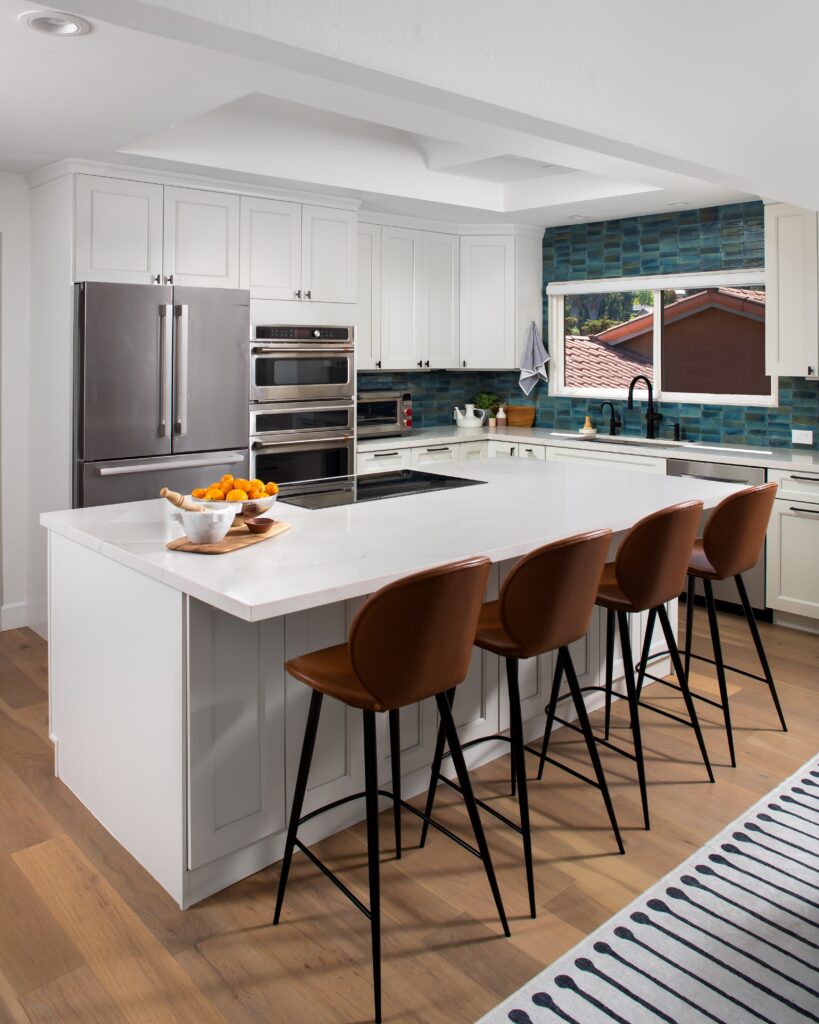
Flooring moves through every room in your home. When it’s right, it creates a sense of flow you feel even if you can’t name it. It’s the quiet thread that holds a home together. When it’s wrong, however, it works against everything else you’ve invested in throughout your home. No amount of beautiful furniture or finishes will fully make up for it.
What people don’t always consider is how hard flooring works. Every day, people walk on it dozens of times and drag furniture across it. Spills, cleaning products, pets and running children all take their toll. Through all of it, we still expect it to look beautiful, not just on installation day but ten years in. That’s an extraordinary ask of any material. That’s why what’s underfoot deserves as much thought as the walls or countertops. Material quality, installation and finish longevity all matter. Here, the gap between a good decision and a great one shows up every day you live in the space.
What we love specifying right now
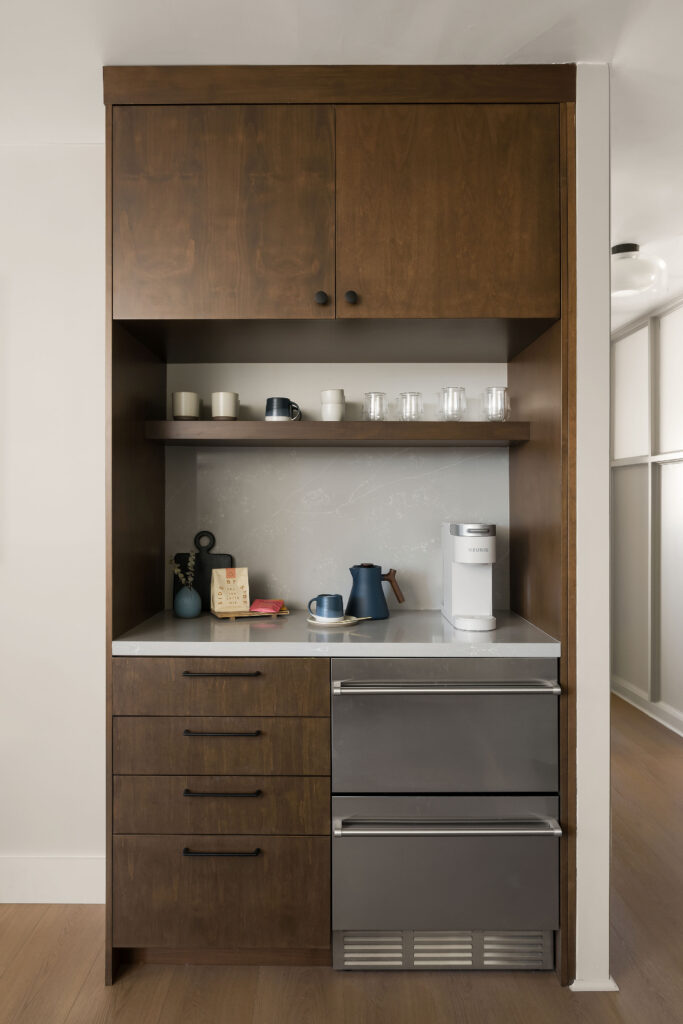
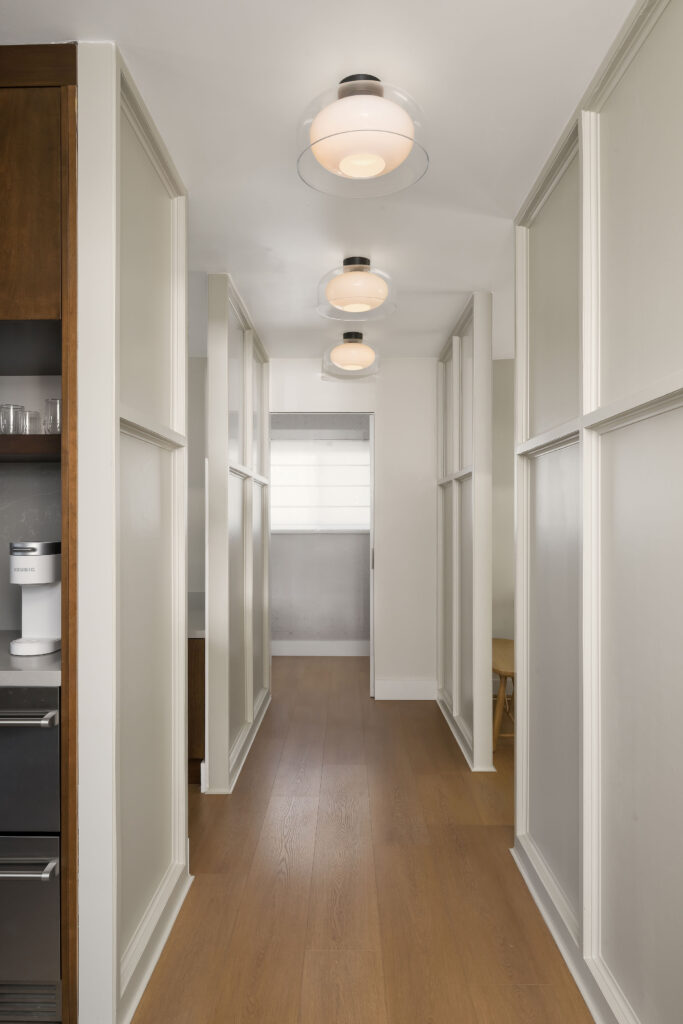
Engineered hardwood remains our first recommendation for living spaces, and increasingly for kitchens too. What we love most is how it lives. Real wood underfoot has a warmth and give you notice immediately. It feels substantial, grounded and comfortable in a way tile and vinyl simply don’t. It also ages beautifully, developing character rather than just showing wear. And when life happens, like a deep scratch, a water stain or years of foot traffic, you can refinish it instead of replacing it. It grows with your home instead of against it.
In wet areas like bathrooms and laundry rooms, we consistently direct the budget to large-format tile. Fewer grout lines mean a cleaner look and easier upkeep. In a bathroom, well-laid large-format tile does something subtle but powerful. It makes the room feel bigger, calmer and more intentional without changing anything else. Per square foot, it’s one of the highest-impact decisions you can make.
Natural stone, like marble, travertine and limestone, is in a category of its own. It has a depth that photos can barely capture. Manufactured materials have spent decades trying to replicate it without quite getting there. Think of the variation in veining, the way it plays with light throughout the day, and the subtle color shifts from tile to tile. Together, those qualities make a room feel truly luxurious rather than just expensive. When the budget allows, natural stone is always worth the investment.
A note on LVT (luxury vinyl tile and plank)
LVT has improved considerably, and we understand the appeal. Brands market it as waterproof, durable and affordable at almost any budget. For certain applications, it absolutely has its place. But there are a few things worth knowing before you commit.
Direct sunlight is one of LVT’s biggest weaknesses. UV exposure makes the material expand, contract and warp over time. That’s especially true in San Diego homes, where we have abundant natural light and love to celebrate it. A floor that looks beautiful in a showroom can behave very differently in a sunny living room.
You also can’t refinish LVT. When it scratches, wears or reaches the end of its life, you have to replace the entire floor. In our experience, that tends to happen within five years. Once you factor in that replacement cost, the original savings often shrink considerably.
For rental properties, or areas where budget is genuinely the deciding factor, LVT is a reasonable choice.
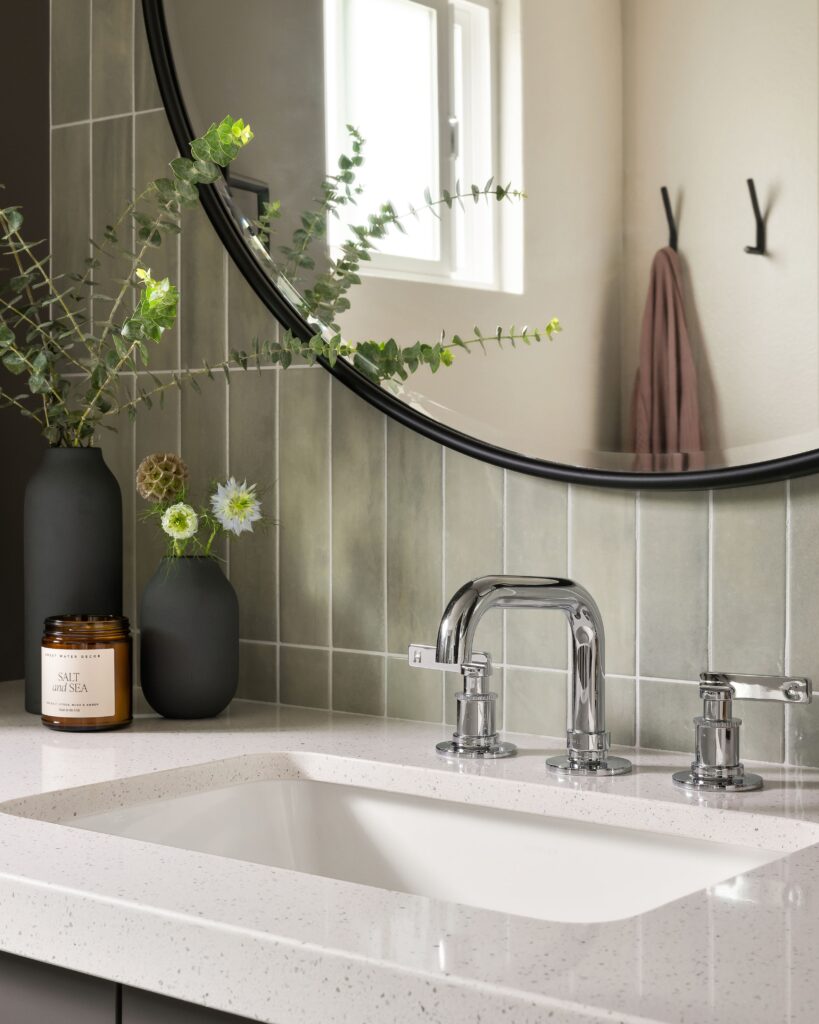
3. Plumbing Fixtures
When people invest in their home, this is the area they most often try to cut. It’s also the one we push back on most.
Think about how many times a day you use your faucet, your shower, and the hardware on your vanity. These aren’t decorative items on a shelf. They’re functional pieces you touch every single day.
Quality plumbing fixtures hold up differently. The finish doesn’t wear off. The mechanism still works smoothly years later. And the hardware feels solid and considered in your hand rather than hollow.
What we’re specifying now: the case for mixing metals
One of the most common questions clients ask is whether it’s okay to mix metal finishes. Our answer is always yes, as long as you do it with intention.
The days of matching every faucet and piece of hardware to one finish are behind us. Today, the most considered spaces layer metals thoughtfully. Each finish earns its place by its role in the room, not by matching everything around it.
Aged brass has become one of our most-specified finishes, and for good reason. It brings warmth, depth and a sense of history that polished metals simply can’t replicate. It also patinas beautifully, so it looks more interesting at five years than it did on day one.
Matte black continues to be a strong choice, especially in bathrooms with a warmer, layered palette. It anchors a space without competing with it. Plus, its clean, graphic quality looks beautiful against natural stone and textured tile.
Brushed nickel remains the most versatile finish we work with — timeless, approachable, and genuinely compatible with almost every palette and style direction. When a client is unsure, brushed nickel is rarely the wrong answer.
A practical rule of thumb: invest in the fixtures you use daily at home, like faucets, showerheads and primary hardware. Your hand finds these pieces every single morning, and you feel the quality difference immediately. Towel bars, toilet paper holders and robe hooks are a different story. They’re as decorative as they are functional, and easy to swap as your taste evolves. Spend where it counts, and give yourself flexibility where it doesn’t.

Where You Can Invest Less in Your Home
This isn’t about cutting corners. Instead, it’s about knowing where investing in your home makes a real difference in daily life, and where it doesn’t. In these categories, a thoughtful selection at a reasonable price won’t compromise the result. Plus, your taste can evolve without consequence.
Decorative Lighting
Lighting is one of the most exciting elements to select, and one of the most trend-driven. A statement pendant that feels right today may feel dated in five years. The good news? Swapping a light fixture is one of the simplest, most cost-effective upgrades you can make. You don’t need a $2,000 pendant when a $400 option delivers the same visual impact. So when your taste shifts, you can replace it without a renovation.
Where we do recommend investing is the lighting infrastructure: the recessed layout and the placement of switches and outlets. Get the bones right, and let the fixtures evolve with you.
Styling Pieces and Accessories
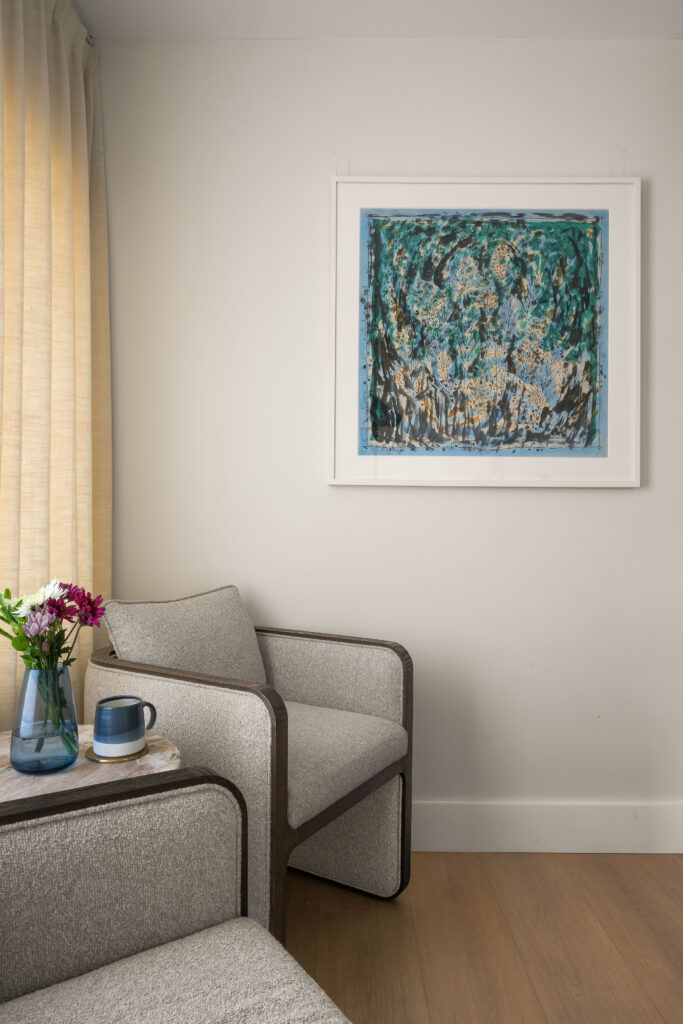
Throw pillows. Vases. Artwork. Coffee table books. Ceramics. These elements breathe life and personality into a space, and they should naturally shift as you grow. Of course, buy them intentionally and because you love them, but don’t feel pressure to overspend. Some of the most beautiful objects in our clients’ homes come from local San Diego makers, flea markets and travels. No price tag can replicate the story behind them. That’s what styling is really about.
Furniture: Where to Invest at Home and Where to Flex
Not all furniture in your home deserves the same investment. Knowing the difference can free up significant budget for what matters more.
Invest in pieces you use every single day:
- Sofas and primary seating. You’ll sit on these daily, and a budget sofa shows its age within twelve months.
- Dining tables. If you entertain or gather often, this high-contact, high-visibility piece earns every dollar.
- Beds and mattresses. They’re the most-used furniture in your home, full stop. This is not where to save.
More flexibility here:
- Side tables and accent chairs. They’re easy to swap as your style evolves, and you’ll find beautiful options at accessible prices.
- Bedroom dressers and nightstands — function and proportion matter here more than brand or origin
- Decorative shelving — with the right styling, a well-placed budget shelf can look just as considered as an expensive one
The Home Investment Conversation We Have With Every Client
Before we talk about a single product, finish, or fixture, we ask every new client three questions about how they want to invest in their home. These conversations shape everything that follows.
1. What’s your total budget? Honest budget conversations at the start lead to the best outcomes at the end. It’s that simple. We’d rather talk real numbers upfront than navigate surprises mid-project. After all, surprises in construction always cost more than honesty at the design table.
2. What’s permanent versus what can change? Cabinetry, flooring, plumbing, and lighting infrastructure are permanent. Fixtures, furniture, and accessories are not. This one question immediately tells us where to protect the budget and where to give it room to breathe.
3. What are you not willing to compromise on? This is the most important question, and the answers are always personal. For some, it’s the shower. For others, it’s kitchen storage or natural light in the bedroom. Whatever your non-negotiable is, we find it early and protect it. Because the thing you compromise on becomes the thing you resent, and a home should never feel like a concession.
Working With a Designer Changes the Math
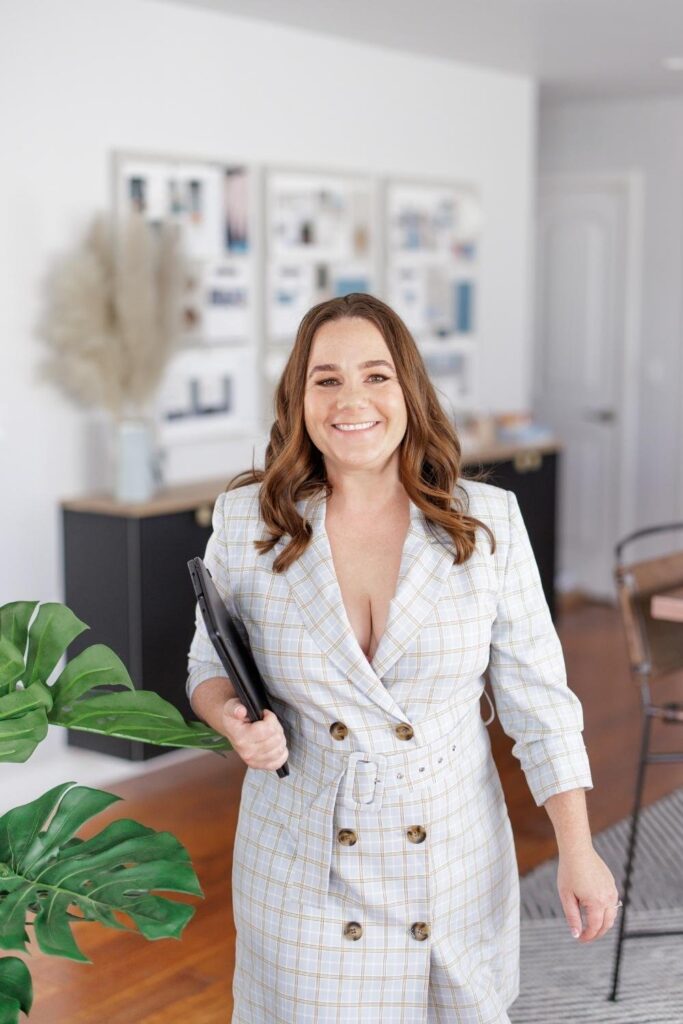
One of the most persistent myths about hiring an interior designer is that it adds cost. In our experience, it almost always does the opposite. In fact, nearly every client who came to us after a DIY renovation attempt would agree.
We know which vendors are reliable, which materials hold up over a decade of daily use, and where the value actually lives. That knowledge saves real money. More importantly, we bring the cohesive vision that prevents costly mistakes. Think of the countertop that looked perfect in the showroom but wrong in the space. Or the tile that photographs beautifully but feels cold in person. Or the layout that seemed logical on paper but doesn’t work in daily life. Every one of those mistakes costs money to fix. A thorough design process upfront costs far less.
The Homes We Love Most
The homes we love most aren’t the ones with the biggest budgets. Instead, they’re the ones where every decision came from clarity and intention. The investment went to what shapes daily life, and the savings came from everything else.
That’s what we’re here to help you build. When you know where to invest in your home, you get a space that works as beautifully as it looks. It holds up as well as it photographs, and it feels completely and unmistakably like you.
From challenge to solution
Most renovation budgets get stretched thin in the wrong places. Here is the framework we use to spend intentionally.
01 · THE CHALLENGE
Budget spent in the wrong places
Homeowners often splurge on trend-driven pieces and economize on cabinetry or finishes, then face swelling MDF, worn surfaces and costly replacements within a few years.
02 · OUR APPROACH
Invest where it lasts, save where it’s easy
We prioritize well-built cabinetry, durable surfaces and quality fixtures, and save on decor and accessories that can be updated later without construction.
03 · THE RESULT
A home that holds up and holds value
The parts you use every day perform beautifully for decades, and the budget stretches further because nothing needs to be redone.
Frequently asked questions
Splurge on items that are hard or expensive to replace and that you use daily: cabinetry, flooring, countertops, plumbing fixtures and lighting.
Save on decor, accessories, throw pillows and some accent furniture. They are easy to change later and do not require construction to swap out.
For most homes, yes. Solid wood construction and quality hardware last for decades, while economy MDF cabinetry can swell or sag within a few years.
Keep reading
- Splurges for Your Home: Where to Invest Wisely
- 8 Ways Working With An Interior Designer Will Save You Money
- The complete guide to kitchen countertop materials — from everyday durable to heirloom luxury
- Designing a Home Office That Actually Works — and Looks Beautiful Doing It
Fall in love with where your life unfolds.
ASR Design Studio is a full-service residential interior design studio based in Escondido and serving San Diego County. We specialize in renovations, new builds, furnishing and thoughtful styling, blending our signature modern coastal style with the way you actually live. We take on a limited number of clients each year so every home gets our full creative attention.

Comments +